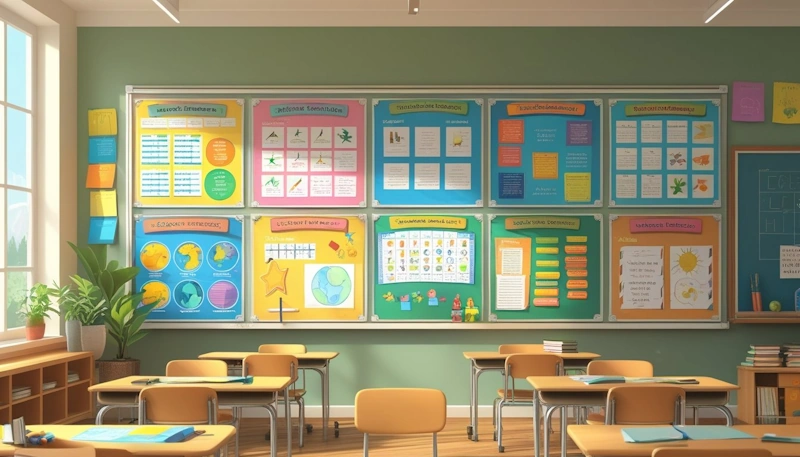
You can turn a bulletin board into a daily learning tool that supports class routines, reinforces skills, and sparks student thinking. Use simple, interactive displays that students can refer to, practise with, and add to during lessons to make your bulletin boards teach—not just decorate.
Expect ideas that spark active learning all year, with themes, strategies and quick builds you can reuse across subjects. You’ll also get practical design tips that keep displays clear, useful and low maintenance so they actually get used.
Furthermore, small changes in layout, captions and student involvement can transform walls into learning hubs that support your teaching goals and boost student independence. If you want displays that work for you, the next sections show ready-to-apply concepts, creative examples and step-by-step tips.
Transformative Bulletin Boards - Concepts for Active Learning
These ideas turn wall space into places where students answer questions, practise skills, and work together. You’ll find low-prep options, hands-on designs, and game-style boards that make practising facts and problem solving part of the day.
Interactive Bulletin Board Ideas for Student Engagement
Make a “Question of the Week” board with a clear prompt and space for student responses on sticky notes. Change the question each Monday; keep a visible tally of answers so students see trends and can debate results. Add QR codes linking to short videos or images to deepen the prompt without extra handouts.
Likewise, use clickable pockets for rotating tasks: vocabulary, short math problems, or quick research challenges. Assign small roles—collector, responder, summariser—to boost responsibility. Display exemplary responses and short rubrics so students know what good answers look like.
To add, make the bulletin boards look simple: bold headline, numbered spaces, and colour-coded response cards. This keeps maintenance easy and helps you reuse the board for different subjects.
Read this blog post to find out more about how to engage students
Hands-On Learning Activities Using Bulletin Boards
Build tactile stations: attach envelopes, flip cards, or magnetic pieces for sorting activities. For science, add laminated specimen photos students match to labels. For instance, when teaching history, pin timeline cards students arrange in order. Let students swap pieces during small-group time.
What’s more, use a “fill-in” scaffold where students add steps to a process or parts of a sentence each lesson. This encourages daily contributions and shows progress over weeks. Keep materials durable — laminate cards and use Velcro dots — so pieces survive repeated handling.
Rotate tasks weekly and post clear instructions on the board. That keeps routines consistent and saves your time.
Game-Based Bulletin Boards: Boggle Maths and Giant Word Search
Create a large Boggle Maths board with a 4×4 letter grid printed big enough for the class to see. Students form maths expressions by linking adjacent letters that represent numbers or operation symbols (e.g. 3, +, 4, =). Score by length or by complexity of the expression. Change the grid weekly to challenge different skills.
To add, for a Giant Word Search, hide content-specific terms—science vocabulary, historical figures, or spelling words—inside a jumbo grid. Provide coloured highlighters so teams work together to find words. Add bonus tasks: define a found word or use it in a sentence to earn extra points.
Both games reward collaboration and quick thinking. Track progress on a scoreboard and rotate teams to keep all students engaged.
Interactive examples and practical templates appear in collections of classroom displays you can adapt, such as ideas for interactive bulletin boards and themed lists of interactive bulletin board ideas.
Creative and Unique Bulletin Board Ideas for the Whole Year
These ideas focus on clear goals: celebrate seasons, match classroom themes, and grow kindness and effort. Each suggestion uses simple materials, involves students, and stays low on visual clutter so all learners can benefit.
Seasonal Bulletin Boards: Autumn, Winter, Spring, and Summer
For autumn bulletin boards some ideas are to use warm colours and simple shapes. Try a “Thankful Leaves” wall where each student adds a leaf with one thing they are grateful for. Use plain backgrounds and 2–3 colours to avoid visual clutter.
Another example for a winter bulletin board would be to display vocabulary or science facts with snowflake pockets. Each pocket can hold a short definition or a student-made example. This keeps the board interactive and easy to update.
Likewise, spring bulletin board ideas work well with growth themes. Create a “Goals Garden” where students pin progress tags to flowers. Use recycled paper for petals and label each tag with one small, measurable step.
To conclude, summer or end-of-year boards can celebrate achievements. A simple “Summer-ready” memory timeline or birthday bulletin board tracks milestones and class birthdays. Use icons (sun, hat, ball) for quick visual recognition.
Themed Bulletin Boards for Classrooms and Schools
Choose themes that connect to your curriculum and school events. For a reading theme, make a “Book Recommendation” board with student reviews on index cards. Place books by genre in labelled pockets so readers can browse.
In addition, for maths or science, use problem-of-the-week or experiment displays. Attach a clear pocket with the task and a feedback strip for student answers. Rotate tasks weekly to keep students engaged without overwhelming the wall.
Furthermore, use seasonal school themes for assemblies or fundraisers. A World Cultures board can feature a country each month with map, flag, and a student fact. Keep lettering bold and content concise so students can scan quickly.
Kindness and Growth Mindset Boards that Build Community
A kindness board can be a “Shout-Out” space where students drop anonymous notes praising peers. Use a mailbox or envelope system so recognition is private or public, depending on student choice.
For growth mindset, post a “Try Again” tracker. Students add a small card when they practise a skill or recover from a mistake. Display simple prompts: “What I tried,” “What I learned,” and “Next step.”
Finally, combine kindness and growth with a weekly challenge—small acts like helping a friend or revising a draft. Use muted colours and one central message to keep the bulletin boards calm and welcoming.
Design Strategies and Practical Tips for Effective Classroom Bulletin Boards
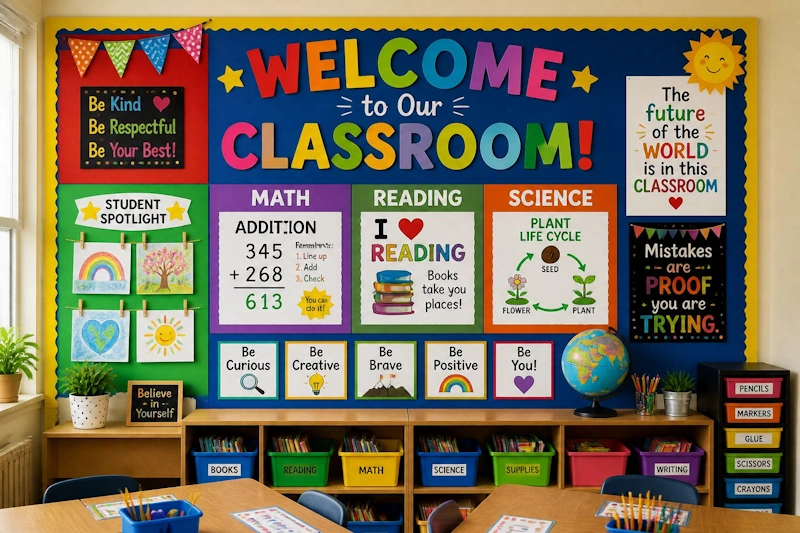
Keep boards simple, clear and tied to what students are learning. Use strong headings, readable fonts, and colour to guide attention to key skills, words and tasks.
Best Bulletin Board Ideas for Teachers
Choose bulletin boards that match a class need: review maths facts, track reading goals, or showcase vocabulary. Create a weekly problem or question students can solve during transition times. Use pockets, clips or Velcro so you can swap content quickly without rebuilding the whole display.
As well, select one or two bold colours for background and a high-contrast font for titles. Limit text to short prompts or instructions so students can read at a glance. Add a small checklist or QR code that links to an answer key or extension activity to deepen learning.
Moreover, rotate interactive features each month to keep interest. Try a “student choice” panel where learners add their own notes or show progress. These practical classroom bulletin board ideas save time and keep your room focused on learning.
Using Word Walls and Visual Cues to Enhance Learning
Place a word wall at student eye level and group words by function: verbs, maths terms, science labels. Use colour-coded cards to signal parts of speech or difficulty level. Keep words short and include a simple example or picture beside each word.
Also, you could turn visual cues into quick routines: arrows for steps in a process, icons for work types, and timers for activities. Label classroom areas with the same icons so students make connections between words and actions. Swap out words as topics change and ask students to add examples to boost ownership.
To finish, use magnetic strips or clipboards to make adding and removing words easy. This way your word wall becomes a living tool that supports spelling, vocabulary growth and independent reference during tasks.
Incorporating Student Work and Ownership into Bulletin Boards
Designate one board as “student work” with clear criteria for display. Use numbered slots or name tags so every student gets a turn. Rotate pieces weekly or fortnightly so the display stays fresh and students stay motivated.
Furthermore, give students roles: designer, curator, editor or photographer. Let them choose layouts, write captions and check spelling. This builds pride and helps you manage classroom decoration without extra workload.
Ultimately, make interactive sections where students add sticky notes with reflections, questions or goals. These hands-on bulletin board ideas encourage participation and show progress in a visible, respectful way.
Conclusion
In essence, bulletin boards should be viewed as much more than just aesthetic additions to a classroom; they are powerful instructional tools that can reinforce key concepts and spark curiosity.
Furthermore, by incorporating interactive elements and student-led content, teachers can transform static wall space into a dynamic extension of their daily lessons.
As a result, students remain engaged with the material even during transitions or independent work time.
Ultimately, moving beyond mere decoration allows educators to maximise every square meter of their classroom to support academic growth.
What is your favourite way to make your classroom bulletin boards more interactive and educational for your students?
Resources of Mine You Might Like
Want Access to my Free Resource Library?
About The Author
Hi! My name is Mr Mac. I am a K – 6 teacher. I love to create resources for teachers to make their teaching lives easier.